Showing posts with label bbc. Show all posts
Showing posts with label bbc. Show all posts
Wednesday, 26 November 2014

Sunday, 2 November 2014
Thursday, 25 September 2014
Is that street lamp watching you?

Read more.
Wednesday, 16 July 2014
Northern Soul: Keeping The Faith. By The Culture Show BBC2
One of the best documentaries about the Northern Soul scene to date, it's been done with love and affection. Produced and Directed by Maurice O'Brien and Edited by David Arthur. Well worth seeing!
Saturday, 3 May 2014
Sodium: Getting rid of dirt - and murder victims

(BBC)
Read the article here.
Wednesday, 19 February 2014
Ai Weiwei vase worth $1m broken in local artist protest
A Florida artist is facing criminal charges after
deliberately dropping a vase by dissident Chinese artist Ai Weiwei in
an apparent protest.
Maximo Caminero, 51, was charged with criminal mischief
after breaking the $1m (£600,000) vase on Sunday in Miami.
Tuesday, 4 February 2014
Saturday, 25 January 2014
Brasilia, a bold experiment in city building
Transformed in just three years from isolated jungle to a modernist dream, Brazil’s capital city is based on architect Oscar Niemeyer’s vision for a classless, new-age world.
For source go here.
For source go here.
Tuesday, 31 December 2013
Breast is best. Shopping vouchers rewarding breastfeeding in UK
In the UK new mothers are to be offered up to £200 in shopping vouchers to encourage them to breastfeed their babies.
The pilot scheme is targeting deprived areas in Derbyshire and South Yorkshire. To qualify for the full reward, the women will have to breastfeed until their babies are six months old.
Critics say the money would be better spent helping those mothers who have difficulties feeding their newborns.
The pilot scheme is targeting deprived areas in Derbyshire and South Yorkshire. To qualify for the full reward, the women will have to breastfeed until their babies are six months old.
Critics say the money would be better spent helping those mothers who have difficulties feeding their newborns.
Tuesday, 5 November 2013
Why children as young as three are sent to boarding school in China
 Family ties are hugely
important in China, but thousands of Chinese parents are still sending
children as young as three away to boarding school. Why do they do it?
"Bye Mum and Dad," the four-year-old trills, with barely a backwards glance.
As her parents wave farewell, she's already happily chatting to her teacher and her classmates.
Monday, 4 November 2013
Japan's amazing lunchboxes
Making a packed lunch for your children to take to school is a chore performed by parents around the world.
But in Japan, it is not just the taste and healthiness of the meal that is important - but how it looks.
The country's ancient emphasis on food presentation has been transformed into a trend for character bento - packed lunches made to look like pandas, teddy bears or even real people.
The BBC's Tokyo correspondent Roland Buerk has been finding out more.
For source go here.
Tuesday, 29 October 2013
Gold actually does grow on trees
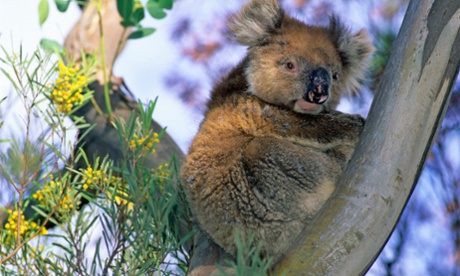
Scientists find small deposits in gumleaves.
Australian geochemists publish paper showing how trees act 'as a hydraulic pump … drawing up water containing the gold'
Contrary to popular belief, gold does grow on trees.
Scientists from Australia’s national science agency, the Commonwealth Scientific and Industrial Research Organisation (CSIRO), have proved that the leaves of certain eucalyptus trees contain minute amounts of the precious metal that have been naturally absorbed.
Also: Listen from the BBC
Scientists from Australia’s national science agency, the Commonwealth Scientific and Industrial Research Organisation (CSIRO), have proved that the leaves of certain eucalyptus trees contain minute amounts of the precious metal that have been naturally absorbed.
Also: Listen from the BBC
Saturday, 26 October 2013
Women, Be Ambitious!
The UK's most powerful women share their advice on ambition and self-belief. A truly feel-good video!
For source go here.
For source go here.
Tuesday, 22 October 2013
Why piano-mania grips China’s children

In Mao’s China, pianos were destroyed
as despised symbols of the bourgeoisie – but now an estimated 40m
children are learning the instrument. What has changed? Clarissa
Sebag-Montefiore investigates.
Keng Zhou holds a prestigious position
as dean of the International Piano Academy at the Shanghai
Conservatory of Music. But he first learnt to play in 1973 not on a
gleaming grand piano but on an instrument’s battered remains. The
legs had been sawn off for fuel and its cover removed to create a
makeshift table. For years in Mao’s China, Western classical music
was viewed suspiciously as a tool of imperialism and the piano a
despised instrument of the bourgeoisie.
Sunday, 13 October 2013
US borrowing crisis 'days away' from danger, says World Bank head
The president of the World Bank, Jim Yong Kim, has warned that the United States is just "days away from a very dangerous moment" because of the government's borrowing crisis.
He urged US policymakers to reach a deal to raise the government's debt ceiling before Thursday's deadline.
The US Treasury will start to run short of funds if no agreement is reached for it to borrow on financial markets.
He urged US policymakers to reach a deal to raise the government's debt ceiling before Thursday's deadline.
The US Treasury will start to run short of funds if no agreement is reached for it to borrow on financial markets.
Saturday, 24 August 2013
Europe’s new designs that may help the UK’s housing crisis
As the UK faces a housing crisis, The Culture Show travels across Europe to find the latest architectural movements which could provide a solution.
The combination of population increases, a shaky economy and changes in working and living habits has led to a housing shortage in the UK. The Culture Show visits three locations in Europe to see how innovative new projects could offer solutions to Britain’s housing problem.
The combination of population increases, a shaky economy and changes in working and living habits has led to a housing shortage in the UK. The Culture Show visits three locations in Europe to see how innovative new projects could offer solutions to Britain’s housing problem.
Wednesday, 21 August 2013
Reading the world in 196 books

I used to think of myself as a fairly cosmopolitan sort of person, but my bookshelves told a different story. Apart from a few Indian novels and the odd Australian and South African book, my literature collection consisted of British and American titles. Worse still, I hardly ever tackled anything in translation. My reading was confined to stories by English-speaking authors.
Friday, 16 August 2013
Michael Morpurgo on how to write for children
Michael Morpurgo is one of England’s best-loved children’s writers. He discusses his fascination with historical subjects and how he writes for children with Razia Iqbal.
Michael Morpurgo has written over 100 books, the most famous of which,War Horse (1982), has since become an award-winning and hugely successful stage play. It was adapted into a feature film by Steven Spielberg in 2011. Morpurgo has won several prizes, including the Whitbread Award. In 2005 he won the Blue Peter award for his novel, Private Peaceful.
He talks with Razia Iqbal about preserving traditional values, the importance of historical accuracy in his novels, and how to tackle serious and disturbing subjects when writing for children.
For source go here.
Wednesday, 14 August 2013
China thirsty for wine
Directors David Roach and Warwick Ross’ film Red Obsession examines the effect of China’s new wealth on the wine industry in Bordeaux, on domestic drinking habits and on China’s perception abroad.
For source go here.
Monday, 12 August 2013
UK wages decline among worst in Europe

Figures from the House of Commons library show average hourly wages have fallen 5.5% since mid-2010, adjusted for inflation, which is the fourth-worst decline in the 27-nation bloc.
By contrast, German hourly wages rose by 2.7% over the same period. Across the European Union as a whole, average wages fell 0.7%.
Subscribe to:
Posts (Atom)