Showing posts with label nature. Show all posts
Showing posts with label nature. Show all posts
Wednesday, 26 November 2014

Wednesday, 8 January 2014
Saturday, 4 January 2014
Your wireless router could be murdering your houseplants

An experiment by a handful of high school students in Denmark has sparked some serious international interest in the scientific community.
Thursday, 12 December 2013
Simulations back up theory that Universe is a hologram
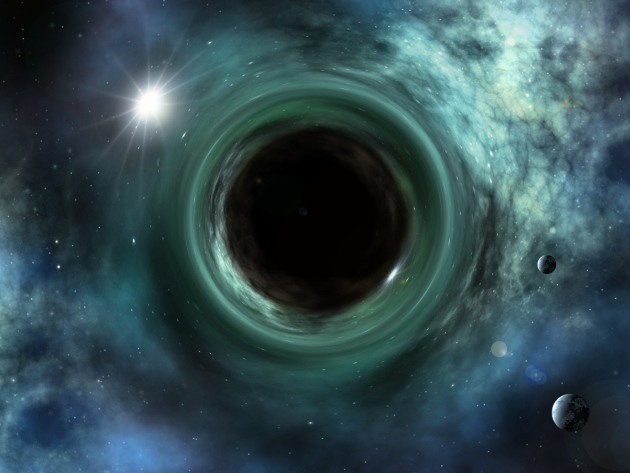 A ten-dimensional theory of gravity makes the same predictions as standard quantum physics in fewer dimensions.
A team of physicists has provided some of the clearest evidence yet that our Universe could be just one big projection.
In 1997, theoretical physicist Juan Maldacena proposed that an audacious model of the Universe in which gravity arises from infinitesimally thin, vibrating strings could be reinterpreted in terms of well-established physics. The mathematically intricate world of strings, which exist in nine dimensions of space plus one of time, would be merely a hologram: the real action would play out in a simpler, flatter cosmos where there is no gravity.
Tuesday, 29 October 2013
Gold actually does grow on trees
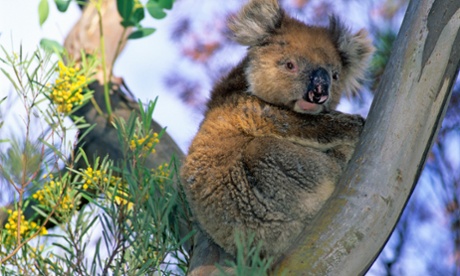
Scientists find small deposits in gumleaves.
Australian geochemists publish paper showing how trees act 'as a hydraulic pump … drawing up water containing the gold'
Contrary to popular belief, gold does grow on trees.
Scientists from Australia’s national science agency, the Commonwealth Scientific and Industrial Research Organisation (CSIRO), have proved that the leaves of certain eucalyptus trees contain minute amounts of the precious metal that have been naturally absorbed.
Also: Listen from the BBC
Scientists from Australia’s national science agency, the Commonwealth Scientific and Industrial Research Organisation (CSIRO), have proved that the leaves of certain eucalyptus trees contain minute amounts of the precious metal that have been naturally absorbed.
Also: Listen from the BBC
Friday, 11 October 2013
The Mushroom Hunters
Every fall, Chemult, Ore., swells with pickers and buyers who flock to the forests to look for the prized matsutake mushroom.
For source go here.
For source go here.
Tuesday, 13 August 2013
Changes in fish market that may change your diet
 Fish are getting more expensive, but they do not all move at the same speed
Not all fish are created equal, however.
Monday, 15 April 2013
Computers can 'see' people's dreams
By measuring people's brain activity during waking moments, researchers were able to pick out the signatures of specific dream imagery — such as keys or a bed — while the dreamer was asleep.
"We know almost nothing about the function of dreaming," said study co-author Masako Tamaki, a neuroscientist at Brown University. "Using this method, we might be able to know more about the function of dreaming."
Saturday, 6 April 2013
Government to Search for Brain’s Buy Button?
 OK, there’s not really a buy button in the brain waiting to be discovered. But the U.S. government is, in fact, launching a major project to create a detailed map of the human brain.
 Much like the earlier and highly successful Human Genome Project, the Brain Activity Map will be a national project to determine brain functions with a high level of detail.
Tuesday, 5 March 2013
We Didn’t Domesticate Dogs. They Domesticated Us.
Scientists argue that friendly wolves sought out humans.

Sunday, 3 March 2013
Global resources stock check
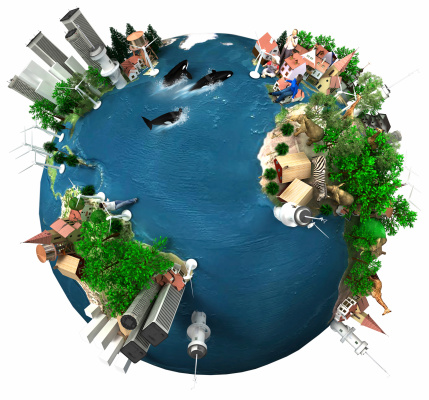
As the world’s population soars, so does its consumption, and as a result we are stretching many of our natural resources to their limits.
Of course, the assumption is that human ingenuity and market forces will prevent supplies from running out: we could create better or cheaper extraction methods, recycle materials, find alternatives to non-renewable sources, or reduce consumption.
Tuesday, 5 February 2013
Oceans are blue heart of the planet
We are only now beginning to understand how essential the oceans are for us. Watch this short but amazing BBC video and find out what really stands behind the name of "the Blue Planet".
Tuesday, 22 January 2013
Is language unique to humans?
Animals communicate with each other, and sometimes with us. But that’s where the similarity between animals and us ends, as Jason Goldman explains.

When Alex unexpectedly passed away after only thirty-one years of life, his last words to his dearest friend were, "You be good. See you tomorrow. I love you." A touching sentiment indeed, but all the more impressive because Alex was an African Grey Parrot.
What is language and what are the chances you ever get on the same wavelength with your pet?
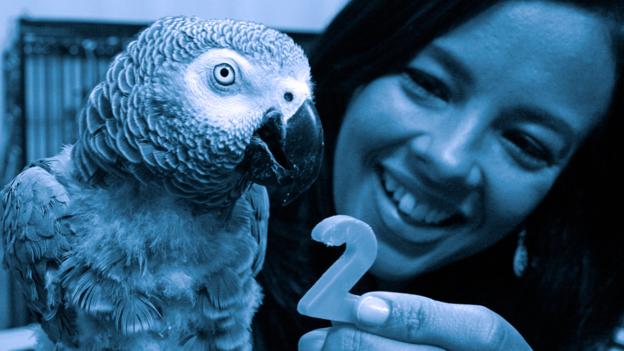
When Alex unexpectedly passed away after only thirty-one years of life, his last words to his dearest friend were, "You be good. See you tomorrow. I love you." A touching sentiment indeed, but all the more impressive because Alex was an African Grey Parrot.
What is language and what are the chances you ever get on the same wavelength with your pet?
Subscribe to:
Posts (Atom)